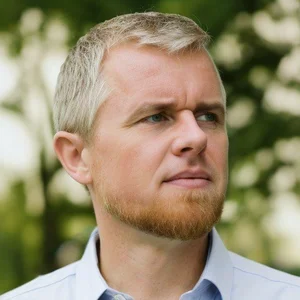
Seeing Each Other: Photovoice as a Bridge, with Roman Williams
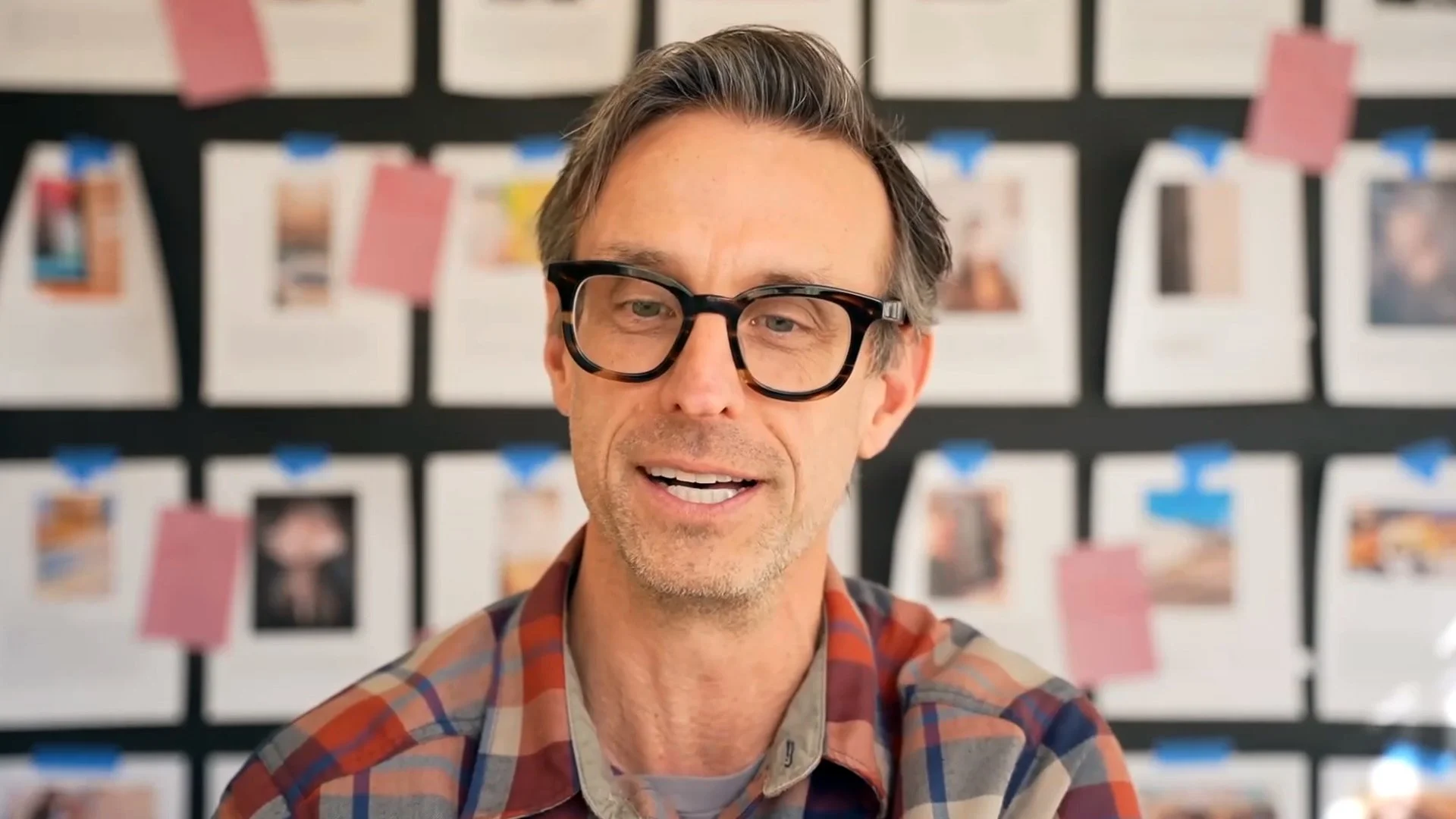
With this episode of Storylinking, I had the chance to connect with Roman Williams. He’s a sociologist, founder of Interfaith Photovoice, and author of Sacred Snaps: Photovoice for Interfaith Engagement. Roman has spent years using participatory photography to help people across deep differences actually see each other. What we ended up talking about was as much about the nature of story and creative process as interfaith dialogue and how we can build bridges.
“We used to sit around fires in a circle and we would put the important stuff up on walls as pictures. And we’ve been doing that ever since. Photos are something mysterious and magical and beautiful that really can bridge relationships, even difficult relationships.”
Roman holds a Ph.D. in the sociology of religion from Boston University and spent nearly a decade as a tenured associate professor at Calvin University. The pandemic gave him the opening to make the leap into full-time community work, and Interfaith Photovoice (an organization he'd been building on the side) became his focus. His recent book, Sacred Snaps, co-authored with Cathy Holtmann and Bill Sachs, is both a research document and a practical invitation. With his work, Roman is putting serious sociological tools in the hands of everyday people, and in the process I think he’s built something really unique, that is genuinely bringing people closer together.
The problem we're actually trying to solve
Building real trust in a group is hard. Getting people to show up is one thing. Getting them to actually see each other, across differences, assumptions, and the polite distance most of us maintain in rooms full of people we don't know well is something else entirely.
Most of the tools we reach for in those situations tend to operate at the level of ideas. And ideas, it turns out, aren't always the fastest path to human connection. People can engage with an idea while keeping themselves at arms length. What Roman is after is something different: the moment when a person feels genuinely seen, and begins to extend that same seeing toward someone else.
His starting point is that polarization, prejudice, and invisibility aren't just disagreements about values. They're failures of perception. "It's one thing to hear words or to see charts and graphs and numbers about people's experiences," Roman says. "It's a totally different thing when you tell someone a story." That’s why he uses Photovoice.
What Roman built, and why it works
Photovoice didn't start with Roman. It was developed in the early 1990s by public health researchers working in rural China, who handed out cameras to 60 women and asked them to document their daily lives. What came back (over 40,000 photographs over the course of a year) revealed challenges that no survey or focus group had surfaced: like childcare, safety, and invisible labor. The photographs became evidence, and eventually a public exhibition that elevated the voice of the participants, giving them a voice and an audience in front of the policymakers who needed to hear them. That's where the name comes from: the photograph elevates a voice.
Roman encountered the tool as a graduate student and eventually recognized something that most photovoice practitioners had overlooked. "There's a dimension I think that's missed in some photovoice work," he explains. "Because of the focus on that end goal, they missed the possibility, the power that I've discovered that happens on the journey to change." That journey involves people in small group dialogue, sharing photographs of their daily lives and asking each other genuine questions, and it builds something that's hard to manufacture any other way: trust.
I experienced this firsthand when I joined one of Roman's free monthly workshops shortly before our interview. A group of strangers on a Zoom call, sharing iPhone photos around the theme of gratitude. It shouldn't have worked as fast as it did. But within that 90 minutes, something shifted. The questions we asked each other were thoughtful and curious. The stories that came out of a single photograph were richer and more honest than anything I would have expected from a cold start with people I'd never met. I left with a genuine sense of connection, and a real sense of having been part of something with that group.
Roman describes photographs as a kind of booster rocket, something that puts a conversation into orbit much faster than a question alone could. A photograph is an object outside of yourself. It gives you somewhere to start that isn't directly and nakedly you. "Photos are answers to questions that I might not have known to ask," Roman says, citing sociologist Howard Becker, and I think that's exactly what makes the process work. Once someone has walked through that door, the conversation that follows tends to go somewhere real, and often unexpected.
What this means for storytellers like me
Roman and I spent part of our conversation on a tension I’ve recognized in my own work. As a filmmaker and creative professional, it's easy to arrive in a community with a camera and a set of questions and position yourself as the architect of the narrative. You're doing the work on someone's behalf, but you're still the one deciding what gets captured, what gets shaped, what gets shared.
What Roman has built is a reminder that the creative tools we carry, be they a camera, a process, or a set of questions, aren't just for the named Creatives or Producers. They're tools for the community. Inviting someone else into your craft, creating a space where they can tell their own story, is itself a form of community building. The things we make when we work that way tend to be more honest, more connective, and more owned by the people whose story they share.
Roman frames this through a question about the hero's journey, specifically, who the hero is. "There are too many people in the world that think they're the hero of someone else's journey," he says. "The hero is [actually] the person you're trying to help. I fancy myself Yoda. Here's your lightsaber. I'm not gonna fight your battles for you, but here are the tools that you need to do it."
I find that both humbling and clarifying. The best facilitation, the best filmmaking, the best community storytelling - it doesn't center the person holding the camera. It creates the conditions for someone else to be seen. And it makes me want to keep looking for the places in my own work where we can hand the camera to someone else.
Try it
Before your next community gathering (think meeting, event, or a simple team check-in) send a request in advance. Ask people to find one photo already on their phone that represents something they're grateful for, something they're hoping for, or something that's been on their mind. What they share doesn't have to be profound. It just has to be real.
When you gather, make space for a few people to share, even just ten minutes. Let the group ask questions, and then make space for the person to respond. Take turns and see what opens up when the conversation starts from something someone made, rather than something someone said.
Additional Resources
Interfaith Photovoice: https://www.interfaithphotovoice.org
Free monthly online workshops: https://www.interfaithphotovoice.org
Sacred Snaps: Photovoice for Interfaith Engagement: https://www.routledge.com/Sacred-Snaps-Photovoice-for-Interfaith-Engagement/Williams-Holtmann-Sachs/p/book/9781032856643
Roman on LinkedIn: https://www.linkedin.com/in/roman-williams/