Our Missing Infrastructure: Connection as a Civic Necessity
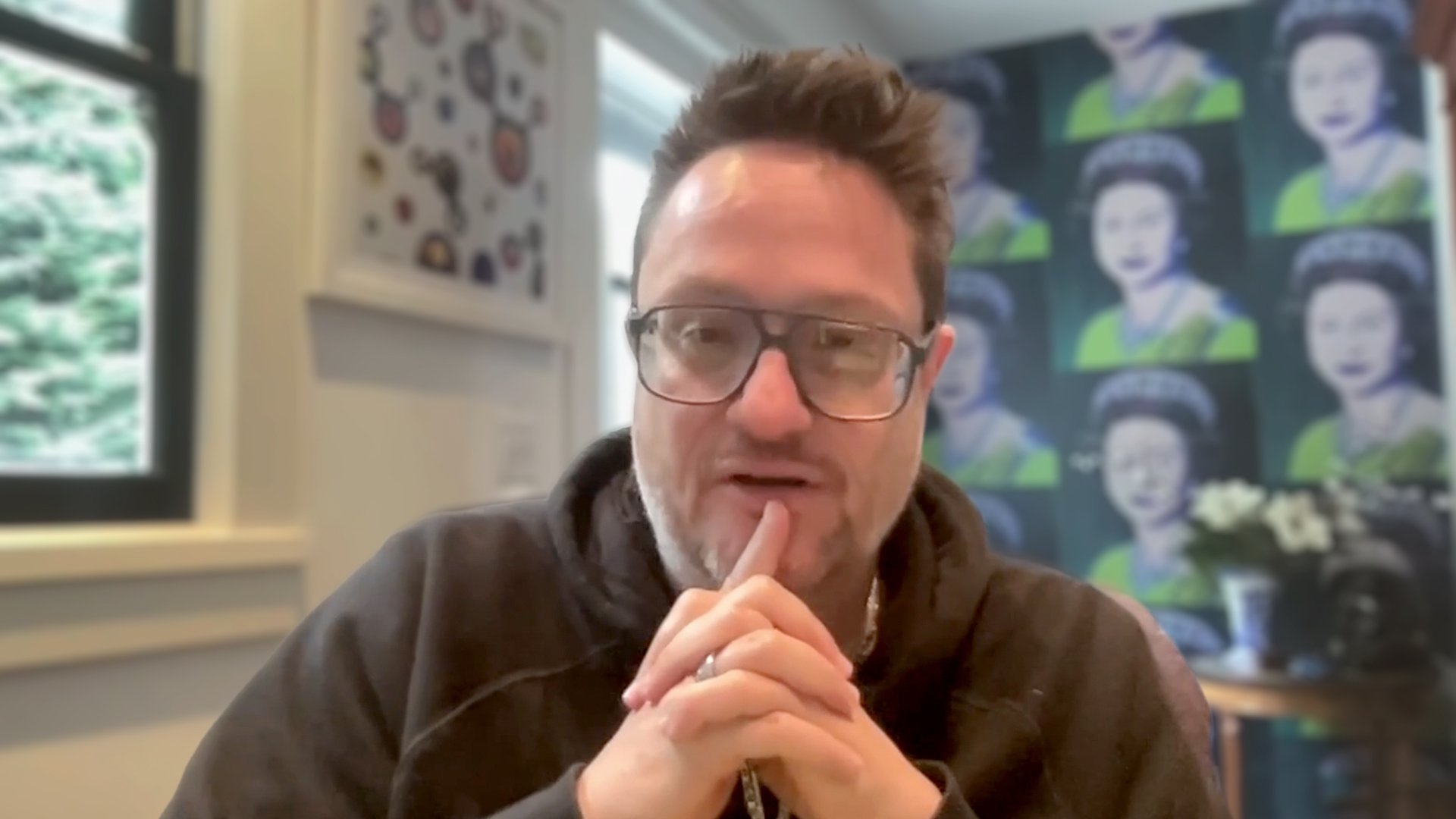
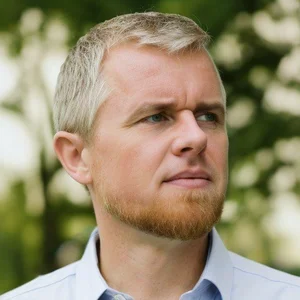
In this episode of Storylinking, I had the chance to speak with Aaron Hurst, founder and CEO of the U.S. Chamber of Connection and author of The Purpose Economy. Aaron shares what he's learned piloting the first-ever city onboarding program in Seattle, and why designing for belonging may be one of the most urgent civic challenges of our time.
“The number one challenge in our country right now is the decline in connection and trust. When you move to a city, you learn how to turn on the lights, but no one teaches you how to turn on connection and community.”
Aaron Hurst has spent decades building infrastructure for the things we're missing. In 2001, he founded the Taproot Foundation, which essentially created a $15 billion pro bono services market in the U.S. by connecting skilled professionals to nonprofit organizations. He then co-founded Imperative, a purpose-profiling platform used by Fortune 100 companies, and wrote The Purpose Economy, which predicted that meaning would become a core driver of economic value years before that became a mainstream idea. His grandfather helped create the Peace Corps and ran the Aspen Institute for 25 years, and that thread of thinking about civic connection and cross-cultural relationship has clearly stayed with Aaron across his career. Now, with an organization he’s launched called the U.S. Chamber of Connection, he's tackling what he describes as the defining challenge of our time: the collapse of social trust, and the infrastructure vacuum that's making it worse. I find Aaron's work compelling because it’s about systems, treating connection as something that can be designed, built, and sustained at civic scale. Sure, it’s going to take hard work and people willing to step up. But he’s also offering us a vision for a repeatable way to bring the people in our communities together, toward the things we really care about.
We have the power to shape our own stories
When Aaron started exploring connection in Seattle, one of the first issues he identified was a story problem. In our interview, Aaron described Seattle’s historical reputation for coldness toward newcomers, something locals called the "Seattle Freeze." Aaron found that this narrative was doing real damage, not because it was necessarily accurate, but because it was the dominant story people were using to make sense of their experience.
His response was to try and launch a counter-narrative: the Seattle Bear Hug. "We would love it if someone said, hey, Tom, you live in Seattle, what's it like to live there? And you're like, it's like being constantly enveloped in a bear hug." Aaron quite literally created that bear. He ordered a mascot costume, put it in the streets, and began giving people hugs. That started to give people a different story to carry around and share. It sounds simple, but the effect was significant. People who had been reinforcing the freeze started questioning it. The bear became a really visible marker of an alternative narrative, without needing to argue anyone out of their assumptions.
I think this is a great reminder that in general, our work is going to be at its best when it doesn’t just describe the work around us, but actively engages with it in present tense.
Onboarding gives people a structured way in
Aaron has since launched an initiative called the Chamber of Connection. At its heart is what he calls “city onboarding.” His reasoning is straightforward: we have onboarding processes for places like companies and universities because we recognize that belonging doesn't happen automatically. But most cities and other informal communities have never had anything like it. People move in, figure out the logistics, and are largely left on their own to find community. With city onboarding, Aaron is working to change that.
The Seattle Welcome is a four-hour monthly workshop for newcomers. In these workshops, Aaron and his collaborators ask participants "reflect on where they found connection in their lives before. And how do they want to replicate that? And what do they want to try that's new?" Participants work through those questions alongside other newcomers, and in doing so, they start to solve connection challenges as a team. That’s its own shared experience, and the launching point for an authentic and individualized journey toward what’s next.
An interesting detail from Aaron: just as many people signed up to volunteer for these workshops as to attend them. Aaron suggests that could reflect a general desire for increased connection, and that while some people will come looking for help, others will find a sense of safety in being one of the helpers. Regardless of what door each person walks through, it’s still an opportunity to connect.
Aaron’s six points of connection
Alongside his programs, Aaron has developed a more formal framework, called the six points of connection. He developed the six points to provide people with a concrete, non-shaming vocabulary for thinking about what a connected life looks like, and where their gaps might be.
The framework draws from research across civic engagement, healthcare, democracy, and economic development to identify the six activities that, when present, support both individual flourishing and community health:
Neighborhood Contact
Community of Identity
One-On-One Relationships
Third Place
Community of Play
Community Service
As Aaron says, "Just telling someone they need to make more friends is not helpful. It just sounds like judgment. And that's not what's going to move someone forward." The six points are designed to break an abstract imperative down into something a person can actually think about and plan around.
Communities build at the scale of a dinner table
Aaron is building a civic initiative that he hopes will eventually exist in cities across the country, but he's very clear in his sense that most of the work of belonging happens at small scale. He suggests that people develop a real sense of community in groups of roughly eight to fifteen people, meeting together repeatedly over time. Larger communities matter too, but typically depend on a foundation of smaller, more immediate relationships.
"A lot of our society now is about doing things one time and then moving on. And we really need to build opportunities for people to show up over and over again with the same people so they start to actually get to know them." Aaron suggests that this is why things like book clubs may work better than one-off networking events. Proximity and repetition are essential. And it’s on this repeating pattern that we can start to build stable systems.
In community storytelling, I think about this in similar terms. We can draw people together around a specific story. The audience for that story might be smaller, but really important. If we repeat this approach over time, we’ll have an opportunity to engage more people, in ways that are especially relevant to them. And on the basis of this pattern, we can structure a composite story that is relevant to an entire community. But it depends on the surface area of all of those smaller stories, and a sustained effort across time and topics, toward a connected sense of the world.
Story makes vision real
When I asked Aaron about the relationship between storytelling and community, he framed it as a core leadership tool. He describes himself as a visionary entrepreneur, and for him, vision begins with story. "What is the story of that end state of where you're trying to go that you're using to inspire people to see that something's possible?"
But he was quick to point out that the overall vision story isn't enough on its own. The richness comes from layering in the facets: the story of the setting, the stories of individual characters, the scenes that give texture to an otherwise abstract arc. "If you think about it in terms of a movie, there's the overall sort of vision for the movie, but there's each scene has a story. Each character has a backstory. Like that's what makes the richness of that overall movie."
If you’re lucky, a single compelling narrative can help you and your community to launch something big. But it takes a whole ecosystem of connected stories, told with and shared back to the community itself, to sustain something and help it grow.
Try it
Think about the community you're building for or working within. Before your next event or meeting, try doing what Aaron did in the very early days of this work: host a small meal, or virtual coffee. Invite five to eight people who are connected to the work, and just listen. Ask them how they found connection in a past community they were part of. Ask what's been harder about this one. You don't need an agenda beyond that. Let the conversation surface what people actually need, and let the act of gathering do some of the connection work itself. You might be surprised what you learn, and who shows up ready to help!
Additional Resources
U.S. Chamber of Connection - Aaron's organization, with research, resources, and information about the Seattle pilot and future city expansion
The Purpose Economy by Aaron Hurst - his 2014 book predicting purpose as a core driver of economic value, still very much worth reading
Aaron Hurst on LinkedIn - he's active here and welcomes connection requests from people doing this kind of work